
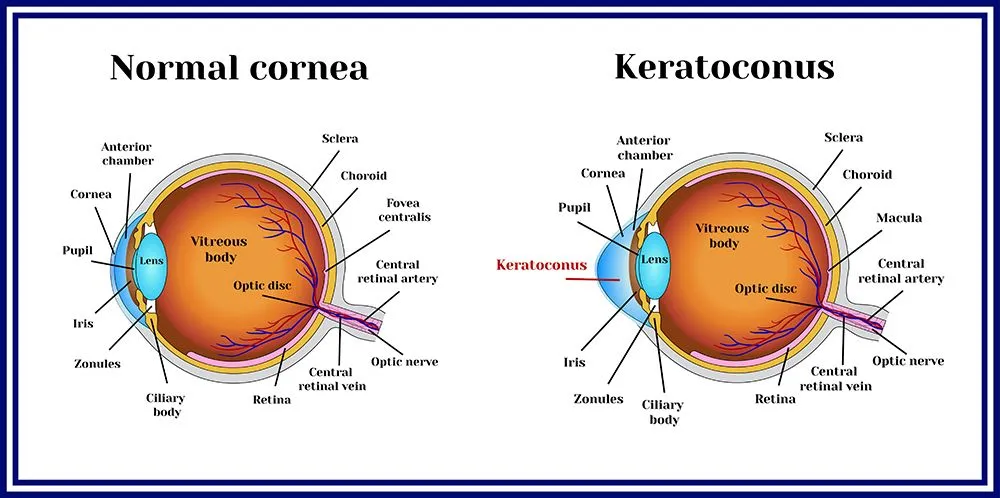
Keratoconus is an eye condition that gradually changes the shape of the cornea, the clear, dome-like surface at the front of the eye. Instead of remaining smooth and rounded, the cornea becomes thinner and begins to bulge outward into a cone shape. This shift disrupts how light enters the eye, leading to distorted vision that can’t always be corrected with standard glasses.
Recognizing the Signs
In its early stages, keratoconus often feels subtle—slight blurring of vision, increased sensitivity to light, or frequent changes to your glasses prescription. Over time, however, these symptoms tend to intensify. You might notice ghosting or halos around lights, particularly at night, or find it harder to read road signs and text from a distance.
What Causes It?
The exact cause of keratoconus isn’t fully understood, but several factors seem to play a role. Genetics may increase your risk if the condition runs in your family. Chronic eye rubbing and conditions like asthma or allergies are also linked to its progression. Regardless of the cause, keratoconus requires close monitoring because it tends to worsen if left untreated.
How It’s Treated
The good news is that modern treatments can slow or even stop keratoconus from progressing. In the earlier stages, custom contact lenses can improve vision by reshaping how light enters the eye. For more advanced cases, corneal cross-linking is often recommended. This procedure strengthens the cornea, helping it resist further thinning and bulging. In severe cases, when vision is significantly impaired, a corneal transplant may be necessary, but this is far less common today thanks to earlier intervention.
Why Early Care Matters
Because keratoconus develops gradually, many people don’t seek help until their vision has noticeably changed. But prompt diagnosis and treatment are key to preserving clear sight. The sooner the condition is identified, the more options you have to keep it from progressing.
Call Our Eye Doctors near You to Schedule a Visit Today
At VistaSite Eye Care in Bronx, NY, we use advanced diagnostic tools and proven treatments to manage keratoconus effectively. If you’re experiencing unexplained changes in your vision, call us today at (718) 324-2020 to schedule an appointment. Protecting your eyesight starts with a single step—and we’re here to help you take it.
